
We build and test both the simulator and the rover
Our members built nine generations of rovers over four years in the student team ARES Project and competed with real hardware in international finals. Software, electronics, mechanism and thermal are all covered in house.
Accelerating the build-out of a lunar outpost, and sustaining it
We are building new infrastructure to support lunar activity through robotics and digital technology. Our first mission is pre-mission evaluation using a lunar digital twin. By developing both simulation and hardware, we can use ground tests and future space-mission data to update models and support vehicle design and task planning.
Reduce planning rework
Compare vehicle, terrain and task conditions before execution to support design and operational decisions.
Improve with measurements
Measure the gap between predictions and hardware tests, accumulating calibration data to update the model.
Enable autonomous operations
Extend a terrain-aware digital twin into an environment for autonomous-control development, including reinforcement learning.
Future Vision
Fill the Moon withALTERNA
We aim to become indispensable to future lunar activity. Our first mission is pre-mission evaluation using a lunar digital twin and test rovers. By improving the model with measurements, we aim to build a foundation for future autonomous work on the Moon.
At a glance
- Team name
- Alterna Robotics
- Origin
- Student team ARES Project
- Rover development
- 9 generations in 4 years
- Current prototype
- Lu-MoS ver2
- Incorporation / registration (planned)
- January 2027
- Planned registered office
- Nihonbashi, Chuo-ku, Tokyo
- Core technologies
- In-house research: Particle Dynamics Engine / Rendering Engine / Sim2Real; Development tools: Isaac Lab / ROS 2
- Development base
- Minamisoma Industrial Creation Center (MIC)
- Planned test sites
- Fukushima Robot Test Field, JAXA Space Exploration Experiment Building, our in-house sand bed, and other sites
Development organization
Our seven-person team from ARES Project combines hardware expertise in mechanisms, thermal design, embedded electronics, measurement and sensing with software expertise in digital twins, perception, control and reinforcement learning. This gives us the potential to develop every system element in house, connecting simulation with hardware integration and validation.
Development team
7 members
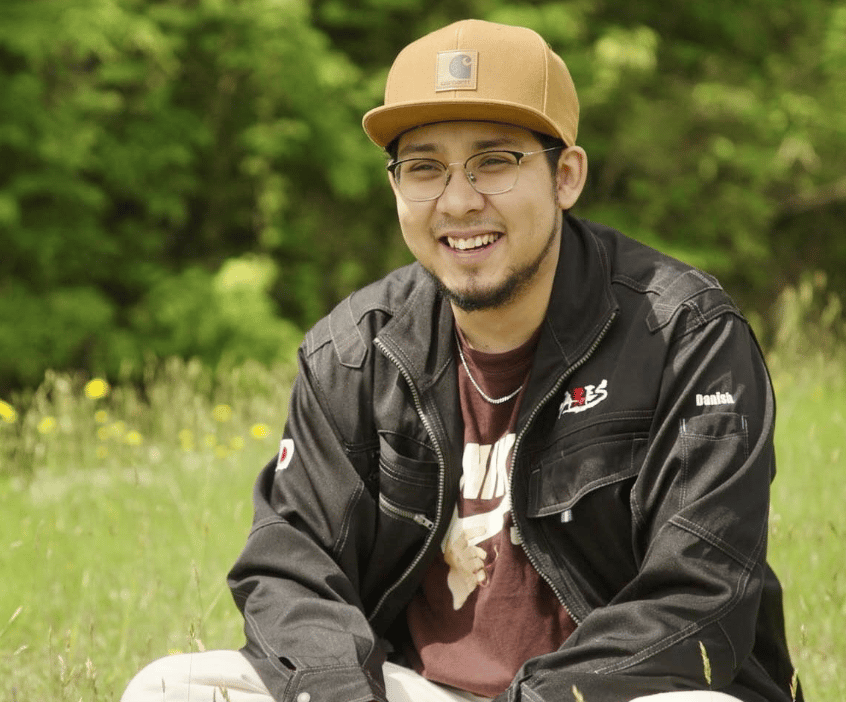 CEOAi DanishiResponsibilityProgram leadership, digital twins and reinforcement learning, hardware validation, commercializationView profileClose profile
Profile
A doctoral student in aerospace engineering at Tohoku University, Ai Danishi is also a 2026 visiting researcher at Georgia Tech's School of Aerospace Engineering, where he studies autonomous-control frameworks using simulated lunar and Martian environments.
Selected experience and achievements
- A founding member and leader of ARES Project, where he has led a team of around 40 through nine generations of rover development and the creation of ROS 2-based autonomous-driving systems.
- Placed eighth overall at University Rover Challenge 2026 and ninth overall at European Rover Challenge 2026; won Tottori Rover Challenge in both 2025 and 2026.
- Selected for a Fulbright Graduate Research Fellowship; winner of the Red Bull Basement Challenge 2026 Japan Final.
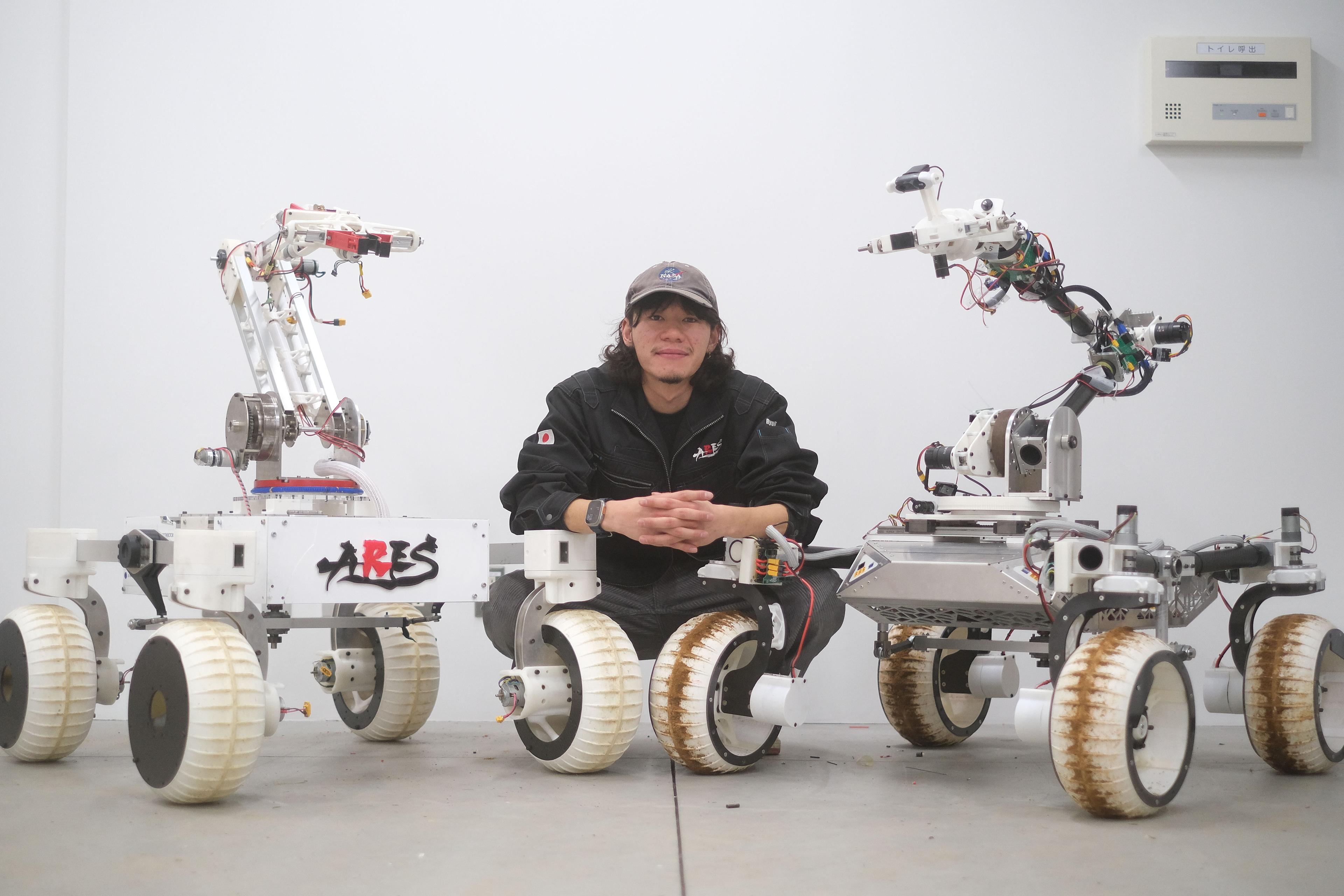 CTORyoji NagaharaResponsibilityMechanism and electronics design for ground test vehicles, integration testing, test site coordinationView profileClose profile
Profile
A mechanical engineering student in the Ishigami Laboratory at Keio University, Ryoji researches lunar automated guided vehicles. His engineering experience also includes rover and autonomous underwater vehicle design and development.
Selected experience and achievements
- A founding member and deputy leader of ARES Project, responsible for the mechanical design of robotic arms for planetary exploration rovers.
- Won two individual missions at European Rover Challenge 2026 and won Tottori Rover Challenge in both 2025 and 2026.
- Received the Young Presentation Award at RSJ 2024; winner of Red Bull Basement 2026 Japan.
What we start from
Lu-MoS ver2
A four-wheel skid-steer prototype rover with a rocker mechanism, and the experience of developing it.
Digital twin
Our Particle Dynamics Engine builds on our CEO's doctoral research results, with calibration and further R&D using in-house hardware. Our rendering engine addresses lunar light, reflection and spectral characteristics, supporting Sim2Real alongside our Isaac Lab, ROS 2 and Gazebo assets.
Nine generations
Chassis, control systems and robotic arms designed and built in house, operated on loose, uneven terrain.
Discuss mission evaluation and joint development
We welcome construction companies planning lunar operations, space companies developing rovers, landers and payloads, and space agencies and research institutions. We are also exploring applications in terrestrial autonomous construction and disaster response.